Live Alerts
Forecasts tell you maybe.
We tell you now.
You've spent months planning. Thousands on flights and hotels. And you'll spend more on guided tours. But northern lights can come and go in minutes — forecasts can't catch that. Get alerted the moment it happens.
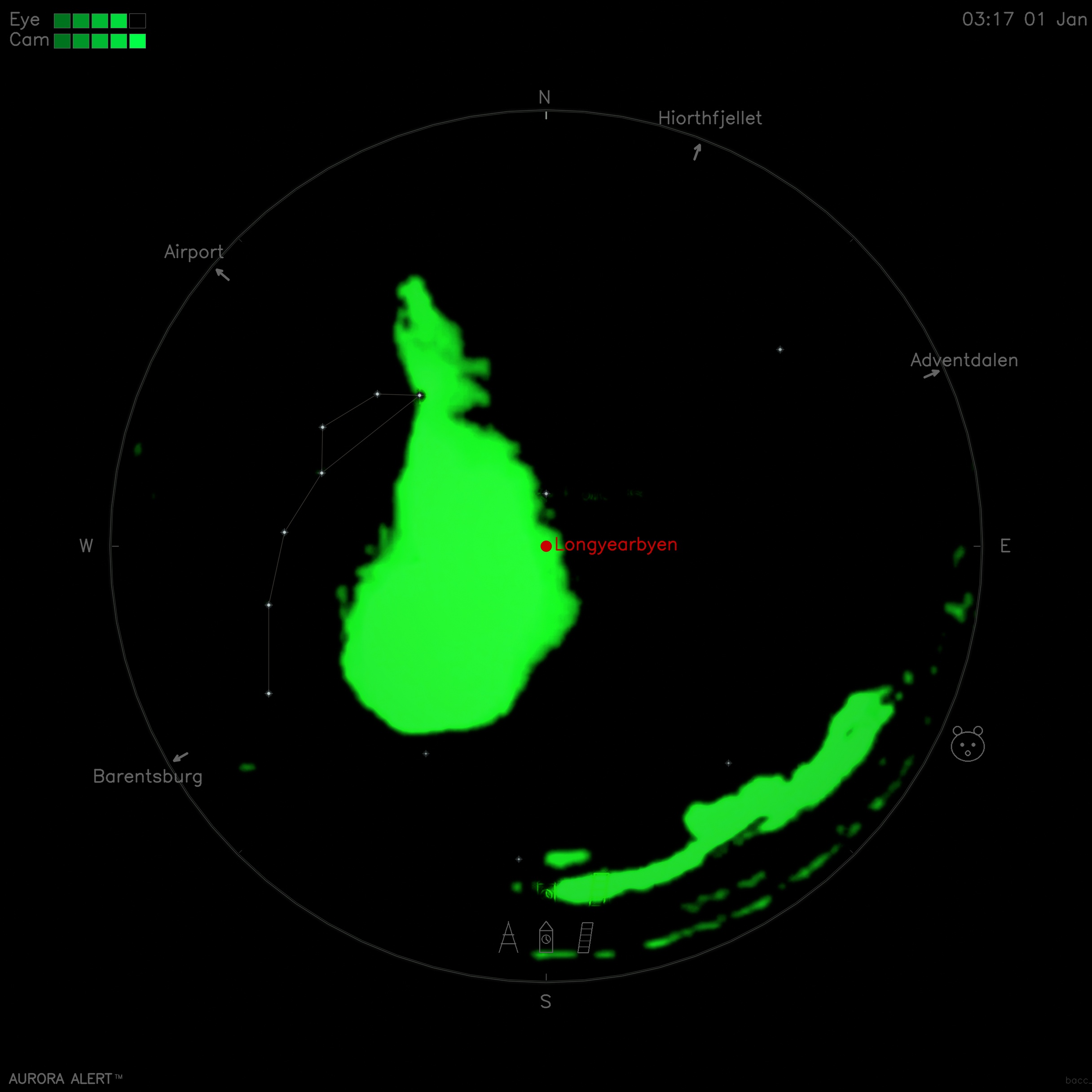
Real alert · January 1, 2026
Why we're different
Stop hoping. Start knowing.
Forecast Apps
Maybe tonight
- ○ KP index predictions
- ○ "60% chance tonight"
- ○ Based on solar wind data
- ○ Can't tell you when — or for how long
- ○ You wait outside hoping
Look Up Now
Now. Go outside.
- ✓ Real-time visual detection
- ✓ "Aurora visible NOW"
- ✓ Computer vision analysis
- ✓ Alerts within 60 seconds
- ✓ Photo proof with every alert
How it works
Three steps to never miss the lights
Northern lights won't wait. Neither should you.
1
We monitor the sky
All-sky sensors analyze the entire sky every 60 seconds, 24/7 during aurora season.
2
AI detects aurora
Our system identifies the distinct green signature of real aurora activity — not clouds, not light pollution.
3
You get alerted
Instant Telegram notification with a live photo. Go outside and look up.
Pricing
Simple, transparent pricing
One-time payment. No recurring fees.
Premium
Real-time alerts
$35 / 7 days
Also: $19/2 days · $49/14 days
- ✓ Instant real-time alerts
- ✓ Be first outside
- ✓ 100% refund if no alerts
100% Aurora Guarantee
No aurora alerts during your Premium period? Full refund. We only succeed when you see the lights.
FAQ
Common questions
How is this different from other aurora apps?
Other apps use KP index forecasts to predict when aurora might happen. We use live data to verify when aurora is happening. You get alerts with actual photos, not probability percentages.
Why Telegram?
No app to download. Works on any phone. Instant notifications that actually wake you up. If you don't have Telegram, it takes 30 seconds to install.
What if it's cloudy?
Our sensors see what you would see. If clouds block the view, we won't send a false alert. That's the advantage of visual verification over forecast-based systems.
Where does it work?
Currently optimized for Longyearbyen, Svalbard. We're expanding to Tromsø and other Arctic locations. Alerts show what's visible from each sensor location.